จิตวิทยาสติและสติบำบัดในประเทศไทย
จิตวิทยาสติเป็นพื้นฐานการพัฒนาสติในการบำบัด โดยพัฒนาเป็นนวตกรรมของการเรียนรู้ที่เรียนรู้ได้ง่าย เป็นที่ทราบกันดีว่าสติหรือสัมมาสติเป็นส่วนสำคัญอย่างยิ่งของพุทธธรรม เพราะอยู่ในอริยสัจ 4 โดยเฉพาะในมรรค 8 (สัมมาสติ) และยังอยู่ในทั้ง 7หมวดขององค์ธรรมเกื้อหนุนการตรัสรู้ (โพธิปักขิยธรรม 37) ในการฝึกภาวนาใน พุทธธรรมซึ่งมี 2 แบบคือ สมาธิภาวนา(ฝึกสมาธิ)และวิปัสสนาภาวนา (ฝึกสติ) เหล่านี้ล้วนแต่เป็นconcept ในพุทธธรรมที่ชาวพุทธรู้จักกันเป็นอย่างดีบทความนี้จะขอกล่าวถึงสติสมัยใหม่(modern mindfulness)ในแบบจิตวิทยาที่พัฒนาโดยผู้นำเช่น Jon Kabat -Zinn, Siegel เป็นต้น และกำลังขยายตัวอย่างกว้างขวางในตะวันตก ซึ่งที่จริงก็มีพื้นฐานมาจากสติทางพุทธธรรมนั่นเอง เพราะอาจารย์ในสายนี้ก็ล้วนแต่ศึกษามาจากอาจารย์ในสายพุทธทั้งสิ้น โดยเฉพาะท่านติชนัช ยันท์ อาจารย์โกเอนก้า ท่านพุทธทาสภิกขุแต่มีลักษณะพิเศษที่น่าสนใจคือ
- เน้นนำมาใช้ในชีวิตประจำวัน (ทางโลกsecular approach) มากกว่าเป็นในทางศาสนา (ทางแห่งการ หลุดพ้น/พ้นทุกข์) รวมทั้งการนำมาใช้ในสายสุขภาพเพื่อรักษาโรคเรื้อรังทั้งทางกายและทางจิต
- อธิบายด้วยจิตวิทยา และneuroscience โดยมีการศึกษาวิจัยในเรื่องเหล่านี้มากมาย
- พัฒนาวิธีการฝึกที่หลากหลายและผสมผสานบนพื้นฐานของการอธิบายทางจิตวิทยาและการวิจัยมากกว่าการยึดตามวิธีปฏิบัติในแต่ละสำนัก(ปฏิบัติธรรม) โดยกระบวนการเรียนรู้ก็เป็นแบบtraining สมัยใหม่ที่ใช้Active learning ที่นิยมเรียนรู้เป็นgroup Sessionที่ทำให้เข้าถึงได้ง่าย โดยเรียนรู้เป็นขั้นตอนและมีAssignment ให้กลับไปฝึกในแต่ขั้น ซึ่งต่างกับการฝึกภาวนาแบบที่ชาวพุทธคุ้นเคย (การปฏิบัติธรรมเป็นเวลาหลายๆวัน)
จุดสำคัญของบทความนี้ คือนำเสนอการใช้ลักษณะของจิตวิทยาสติข้างต้นควบคู่ไปกับประสบการณ์ของไทยเองในฐานะเมืองพุทธ(สายเถรวาท)ที่มีความเข้าใจและวิธีปฏิบัติพุทธธรรมมาอย่างช้านาน โดยจุดมุ่งหมายสำคัญของจิตวิทยาสติก็คือให้คนเข้าถึงง่ายเพราะไม่ต้องยึดติดกับการเป็นชาวพุทธหรือนับถือศาสนาพุทธรวมทั้งคำศัพท์ต่างๆทางพุทธธรรม และเน้นความเข้าใจที่นำไปสู่การปฏิบัติให้ได้ผลมากกว่าใช้ความศรัทธา ซึ่งจะเหมาะสมกับคนจำนวนหนึ่งที่อาจไม่เข้าถึงการพัฒนาจิตในแบบศาสนาได้ โดยแบ่งการนำเสนอเป็น 5 ตอน ดังนี้
- สมาธิ/สติ ในทางจิตวิทยาเป็นจิตขั้นสูงกว่าเทียบกับจิตพื้นฐาน
- คำอธิบายและการฝึกสมาธิและสติในแนวจิตวิทยา รวมทั้งความแตกต่างและความสัมพันธ์ระหว่างสภาวะทั้งสอง
- การฝึกสติในจิตและการนำมาใช้ในการสร้างสมดุลชีวิต(ปล่อยวาง เมตตา/ให้อภัย)
- การนำมาใช้ในทั้งแบบสุขภาพ(health) และแบบทั่วไปนอกจากด้านสุขภาพ (non health)
- ความแตกต่างของจิตวิทยาสติที่พัฒนาในไทยกับของตะวันตก
- กรณีศึกษา: การนำมาใช้ในผู้ป่วยโรคซึมเศร้า
สมาธิและสติ
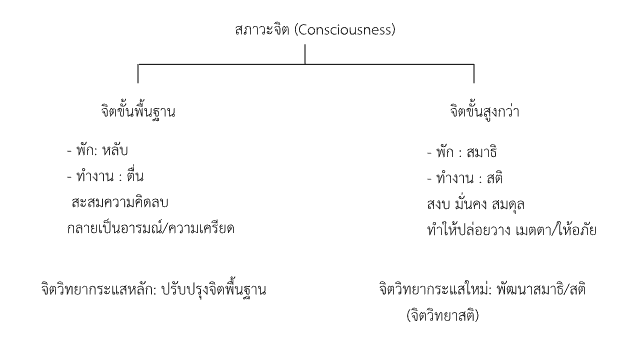
สมาธิและสติในทางจิตวิทยาเป็นจิตขั้นสูงกว่าและประสาทวิทยาของจิตขั้นสูงกว่า ในทางจิตวิทยาสภาวะจิตที่เราใช้งานอยู่คือสภาวะจิตพื้นฐาน(Basic Consciousness) ทั้งแบบพัก(หลับ)และแบบทำงาน (ตื่น) ซึ่งจะมีลักษณะสำคัญคือเป็นสภาวะจิตที่มีแนวโน้มสะสมความคิดลบ กลายเป็นอารมณ์และความเครียด เช่น คนที่บ้านพูดดีๆเป็นส่วนใหญ่แต่เราก็จดจำคำพูดที่ไม่ดี หรือคนไข้ส่วนใหญ่พฤติกรรมดีแต่แพทย์ ก็มักจดจำพฤติกรรมที่ไม่ดี อารมณ์และความเครียดจึงเป็นเรื่องปกติของเราทุกคน จิตวิทยากระแสหลักจึงมุ่งเน้นที่การปรับปรุงจิตพื้นฐานให้ปรับตัวกับอารมณ์และความเครียด เช่น ฝึกคิดบวก คลายเครียด แก้ปัญหา เป็นต้น
ในขณะที่จิตขั้นสูงกว่าทั้งแบบพัก(สมาธิ) และแบบทำงาน(สติ)เป็นสภาวะจิตที่มีลักษณะสำคัญคือสงบ มั่นคง สมดุลจึงไม่สะสมความคิดลบ ทำให้ปล่อยวางอันนำมาซึ่งความเมตตาและให้อภัย(ที่มักไม่ปรากฏเมื่อมีอารมณ์และความเครียด)ได้อย่างมั่นคงและมีคุณภาพ
ในแง่ของจิตพยาธิสภาพ อารมณ์และความเครียดเมื่อมีปัจจัยอื่นๆโดยเฉพาะด้านกรรมพันธุ์และการเรียนรู้ ในวัยเด็กก็จะทำให้เกิดความผิดปกติต่างๆทางจิตเวช ซึ่งการรักษาที่มีคุณภาพจะต้องบูรณาการทั้งการรักษาทางmicdecial (การให้ยา)และทางด้านจิตสังคมโดยเฉพาะจิตบำบัด
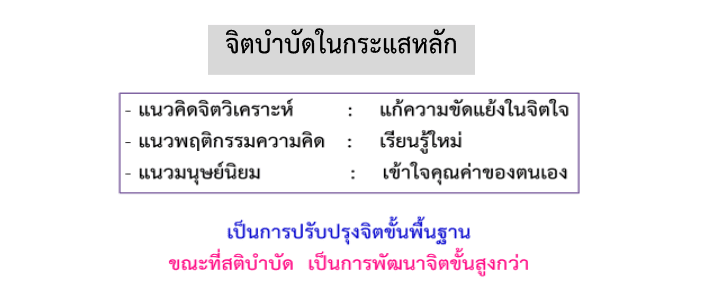
เมื่อพิจารณาจิตบำบัดตามสภาวะจิตทั้ง 2 แบบ จะพบว่าจิตบำบัดตามจิตวิทยากระแสหลักจะมุ่งเน้นการปรับปรุงจิตพื้นฐานโดยเฉพาะใน 3 แนวทางหลักคือ
ขณะที่สติบำบัดจะมุ่งเน้นที่พัฒนาจิตขั้นสูงกว่า ซึ่งเมื่อจิตฝึกอย่างมีคุณภาพด้วยสมาธิลและทำงานอย่าง มีสติ ช่วยให้ควบคุมความคิดและอารมณ์ รวมทั้งปล่อยวางได้เมื่อเผชิญความยุ่งยากใจ ทั้งนี้ก็ยังมีจิตบำบัดที่ผสมผสานทั้ง 2 แบบ เช่น ACT, DBT เป็นต้น
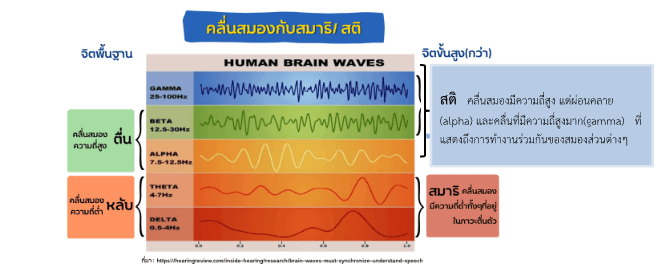
ในทางประสาทวิทยามีข้อค้นพบที่สนับสนุนว่าสมาธิ/สติ เป็นจิตขั้นสูงกว่าจะเห็นได้จากคลื่นสมองขณะ ทำสมาธิที่แม้จะอยู่ในภาวะตื่น แต่คลื่นสมองจะมีลักษณะพักคล้ายๆขณะหลับ ส่วนคลื่นสมองขณะฝึกสติ ทั้งๆที่อยู่ในความจดจ่อกลับไม่เครียด(alpha) ทั้งกลับมีการเพิ่มขึ้นของคลื่นแบบแกรมมาซึ่งแสดงถึงความจดจ่อและการทำงานร่วมกันของสมองส่วนต่างๆซึ่งไม่ค่อยพบในจิตพื้นฐาน
ในระยะหลังการศึกษาด้วยfMRI และเทคนิคอื่นๆที่เห็นการทำงานจริงของสมองส่วนต่างๆ พบว่าผู้ที่ฝึกสมาธิ/สติ สมองจะมีการเปลี่ยนแปลงสำคัญๆ โดยเฉพาะสมองส่วนหน้าสุด(Prefrontal lobe) ที่เกี่ยวข้องกับวิจารณาญาน และการตัดสินใจจะทำงานเพิ่มขึ้น สมองส่วนลิมบิก (Limbic) ที่เกี่ยวข้องกับอารมณ์ โดยเฉพาะอมิกดาลา (Amigdala) ทำงานน้อยลง ซิงกูเลท ไจรัส (Cingulate garus) ทำงานที่แสดงถึงความจดจ่อมากขึ้น และอินซูลา(Insula) ส่วนที่เกี่ยวกับการเปลี่ยนแปลงของร่างกายจากระบบประสาทอัตโนมัติขณะที่มีคุณภาพจิตที่ดี เช่น ความเห็นอกเห็นใจ ทำงานมากขึ้น